
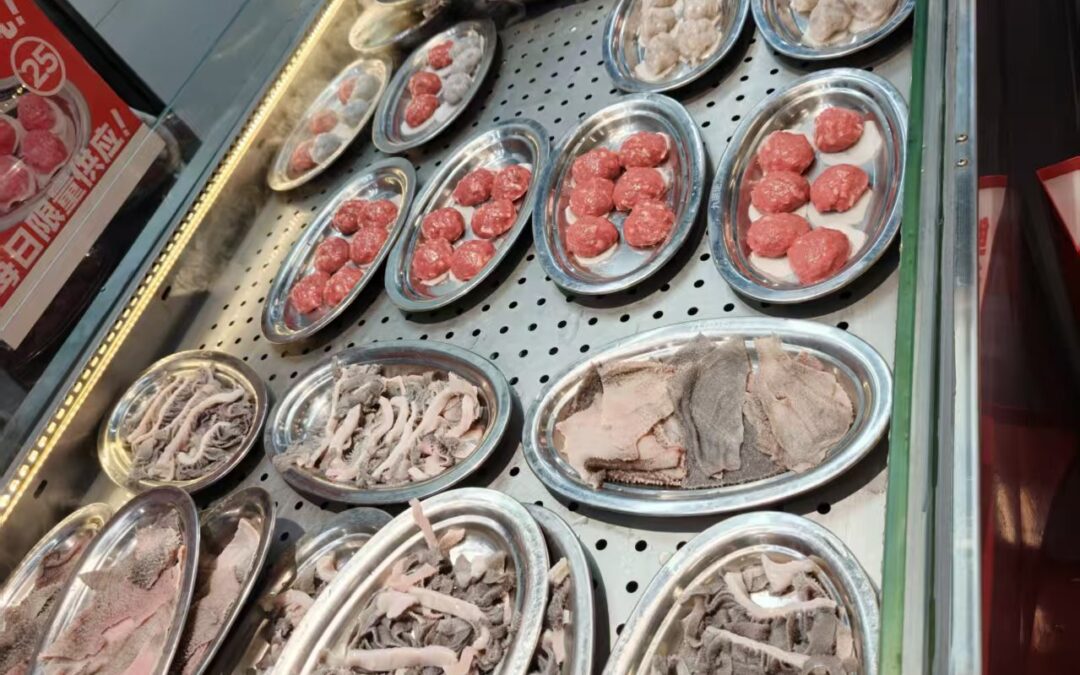
I may have mentioned before that I really enjoy hot pot. China has many different flavors of hot pot. Different areas often have their own specialties. Sichuan and Chongqing hot pots are both spicy but with different degrees of spiciness and with different accompanying spices. When I was in Chongqing and Sichuan last summer, I really wanted to try hot pot, but none of my friends wanted to, and it’s not the kind of meal you can eat alone. I was also hesitant to try the hot pot since several friends had mentioned having upset stomachs for quite a while after eating the hot pot. Our Guangdong stomachs are not adjusted to the spice level.
Henan also has a delicious lamb hot pot. I haven’t been able to find that particular taste outside of Henan, but when I was visiting my friend’s place in Henan, their family made homemade hot pot for the Spring Festival holiday, and that is probably one of my favorite types of hot pot. The soup flavor was rich and deep, and the lamb was amazing. At the end of the meal, we cooked some cheap noodles in the broth, and that was delicious as well.
Guizhou has a sour fish or beef hot pot that was also amazing. When I was there with my friends, we had the beef one because one of my friends doesn’t like fish, and it was delicious, but from what I’ve heard, the fish is even better.
Guangdong is known for having less spicy foods and foods without very strong flavors, so the Chaoshan beef hot pot follows those principles. The soup doesn’t usually have many spices aside from ginger, mushrooms, tomatoes, or some similar ingredients. I love this type of hot pot because Guangzhou is pretty hot and humid, and a light soup is quite refreshing even on a hot day. In China, climate plays a big part in the types of foods that people eat. In the North, spicier food is more common because winters are colder, and spicy foods warm up the body. In Guangzhou, where our winters are mild and much of the year is hot, milder foods don’t weigh down the body and keep people feeling light and fresh.
Chaoshan is a city in the East of Guangdong province, and they are known for having really good and really fresh beef. So Chaoshan beef hot pot (潮汕牛肉火锅; Chaoshan niurou huoguo) has lots of beef. Many restaurants with this type of hot pot have a diagram of a cow showing where the different parts of beef come from. As long as the beef is beef and not stomach or intestine, I like it. I’m not an expert on the different tastes, but some people know which parts are best. Usually, the most delicious parts are the most expensive.
I have an American friend who married a guy from Chaoshan. Both of them are good friends of mine, and we enjoy going out for Chaoshan hot pot together. I especially like having friends who also enjoy this dish since, like I said, it’s not something you can eat alone. Timothy, the friend from Chaoshan, is also really good at ordering the food and knowing how and when to cook everything. He also knows which restaurants are good. He and Jessica, my American friend, found this restaurant that is one of their favorites and soon to become my favorite also. I visited it once before, also with them, and both times it has been very good!
The best Chaoshan beef hot pot restaurant in Guangzhou is called 九亩地牛肉火锅 (Jiu Mu Di Niurou huoguo; Jiumudi Beef Hot Pot).
Address: There are actually at least 11 according to my maps app in Guangzhou, so just copy and paste the name and find the one closest to you. I tried to see if there were any locations in nearby cities like Shenzhen and Dongguan, but I didn’t see any.
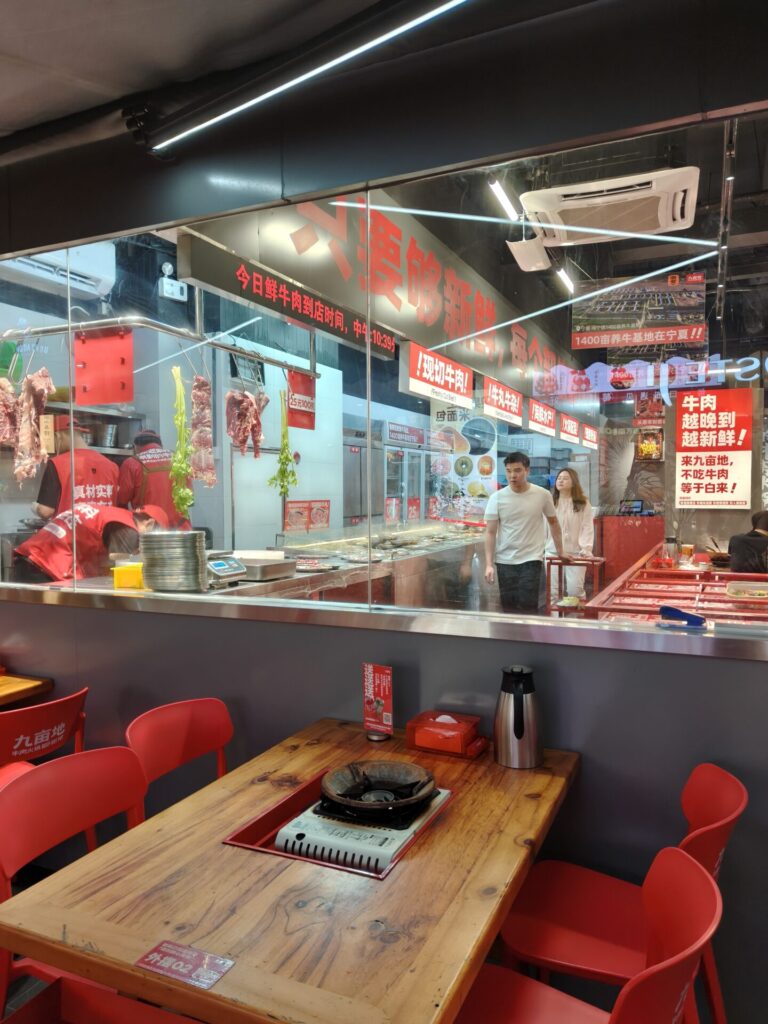
What’s special about this restaurant compared to other Chaoshan beef hot pot restaurants? First, the beef is very fresh, and that’s always very important. The way of ordering at this restaurant is also really special. Instead of telling the waiter what you want from the menu or ordering by scanning a code on your phone, you get to take a cart and go to the front of the restaurant, where they have little plates of all the food on display, and you can just take the ones that you want. In addition to beef, they also have innards and seafood and lots of mushrooms and vegetables. After putting all the foods you want on your tray, you can take it to the check-out and pay right away. But if you want more later, you can always go back and add more.
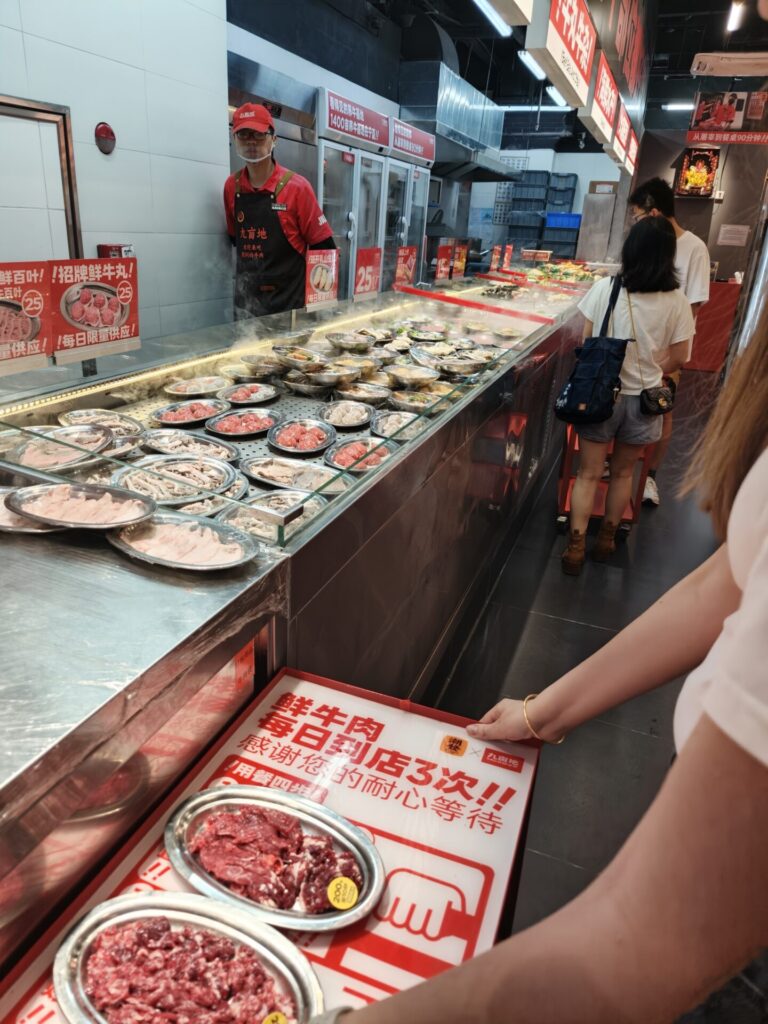
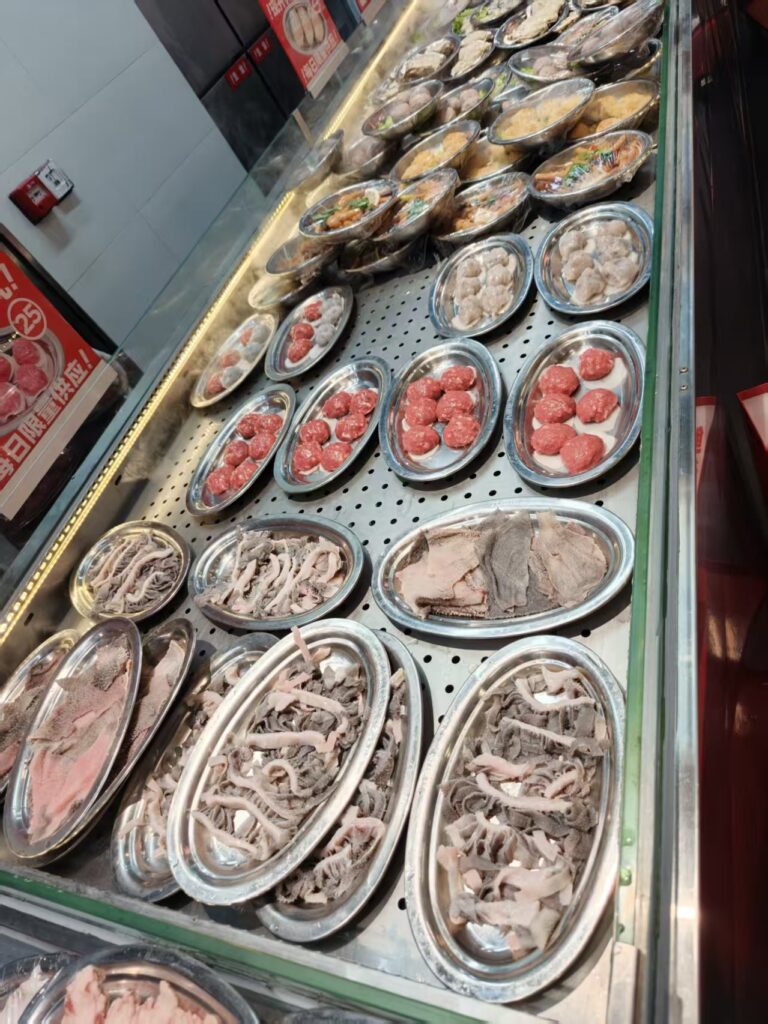
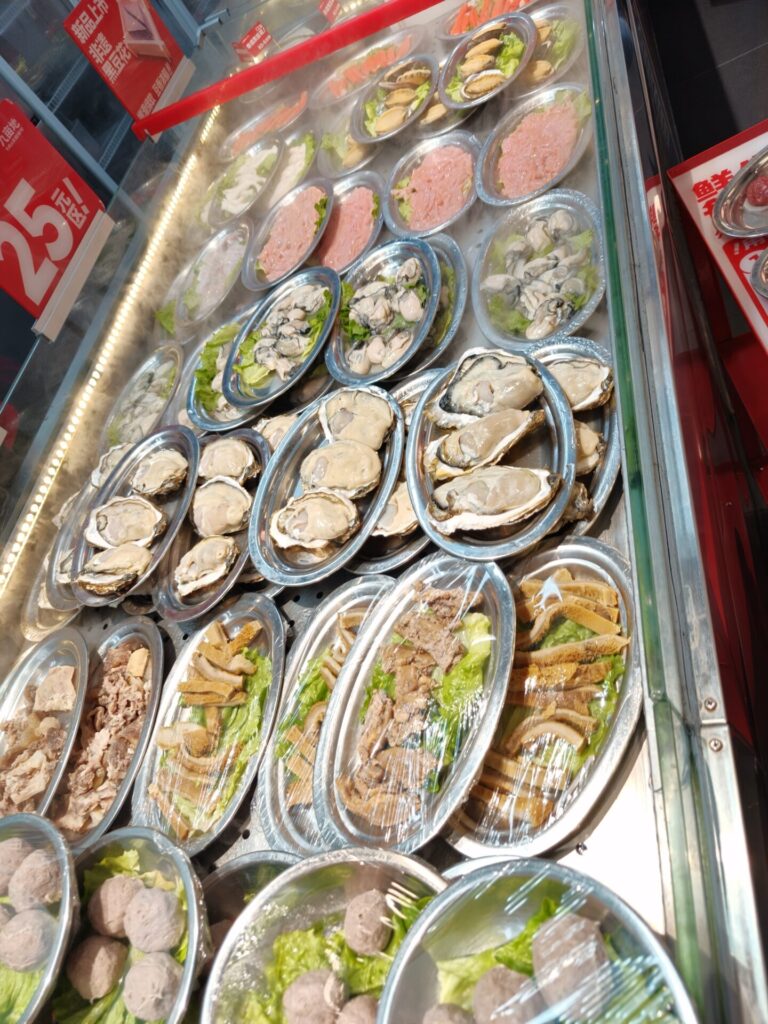
Some of the must-haves are definitely beef balls. They are raw on display, but they will cook in the pot of soup at your table in 5-10 minutes. Actually, all of the food is raw because with this type of food, they put the pot of boiling soup on your table and you can cook the food at your own pace and eat it as you cook it.
I also strongly recommend some of the other plates of beef. The specific names of things might be confusing, but if it’s a thinly sliced piece of red meat, it’s probably beef. I also love potatoes, corn, needle mushrooms, cabbage, and fried toufu skin (the toufu skin is finished in just a couple of seconds).
Cooking the food is a bit of a skill. The sliced beef is usually ready in just 8-10 seconds, and there is a spoon with large holes in it, kind of like a sieve where you can cook the beef without losing the bite-sized pieces in the soup. Usually one or two people in the group will be in charge of the cooking. Timothy is excellent at this job, and he has taught Jessica, so she’s also quite good at judging when the food is ready. According to Chaoshan taste, the beef should still be a bit pink so that it’s nice and tender. Since I have an unrefined palate, I like to cook the meat just a bit longer, so I just dip it back into the boiling water.
Other things like the potatoes and beef balls can just be dumped into the soup since they take a bit longer. But one of the common mistakes is to forget about the potatoes until they are so soft that they crumble when you try to pick them up with your chopsticks. There’s a fine line with potatoes from too crunchy to falling apart. But as long as you don’t forget about them, it’s usually ok.
According to Timothy, you should cook and eat the beef first because you want to enjoy that before you are full. Later, you can fill up on other things. You also want to cook the beef in the soup to flavor the soup and before you add any unusual flavors like seafood.
Most hot pots have their own sauces as well. I love the sauce for Chaoshan beef because most restaurants have peanut sauce. My favorite blend is mixing cilantro, green onions, peanut sauce, garlic, and soy sauce in the small sauce bowl. Some people add spicy peppers or spicy oil or other types of oil, which are also tasty. Each person can make it according to their own preferences because the sauces are individual. If there’s no peanut sauce, usually they have sesame sauce instead which is also a good substitute.
Some hot pot soups aren’t very good to drink, but Chaoshan beef hot pot soup is the exception. Usually, after cooking the first round of beef, Timothy will suggest that we get some soup and put it in a small bowl with celery pieces and seaweed. Yum!
The price is reasonable. We didn’t get too much beef, although I felt like we had plenty, so we only spent around 50-60 kuai ($7-$9) per person. Depending on how many people are in the group and how much you order, it may get up to 70-90 kuai ($10-$13), but it would take a lot of food to be over 80 kuai a person.
Hot pot is not the kind of meal that you eat when you just want something fast. Cooking and eating the food and then waiting for the next thing to cook takes quite a bit of time, and my friends and I can easily spend an hour or two in the restaurant. But I love the atmosphere of hot pot. I love sitting around a table with my friends, not rushing through the meal but enjoying the food together.
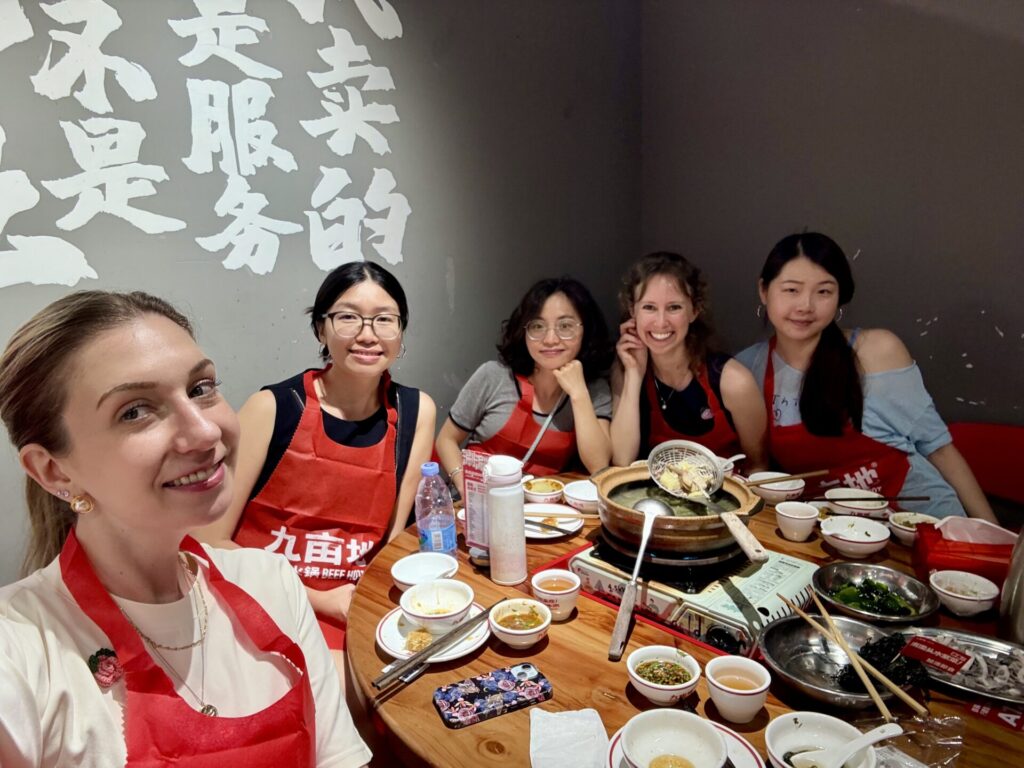
Last time, I went with a group of other ladies and it was wonderful to chat with them. Several of them live on the other side of the city from me, so I don’t get to see them very often, and it was great to catch up. I love hot pot because it forces me to slow down and enjoy the experience of eating. Also, the taste is delicious. As we leave the restaurant, the smell usually clings to our clothes just like the good conversation goes with me as I return to the busyness of life.
Sounds delicious! Maybe you could make some for us when you are here!
That would be fun! I’ll ask around about how to prepare the soup!