I first learned about mate (an Argentinian tea; pronounced mah-tay) from a video that my colleague found to show to our middle school students when I was teaching at the middle school. The video showed tea and tea customs from around the world. I love tea, and I love culture, so learning about tea from other cultures was fascinating to me, and I have always wanted to try mate.
Several years ago, I met a friend from Argentina, Matías, and I found out that he loves drinking mate. Unfortunately, I have a caffeine sensitivity, so I have to be careful about when I drink caffeine, and for a while I was avoiding it completely. But I still wanted to try it, and Matías finally made it happen when he made mate for Kendra and me.
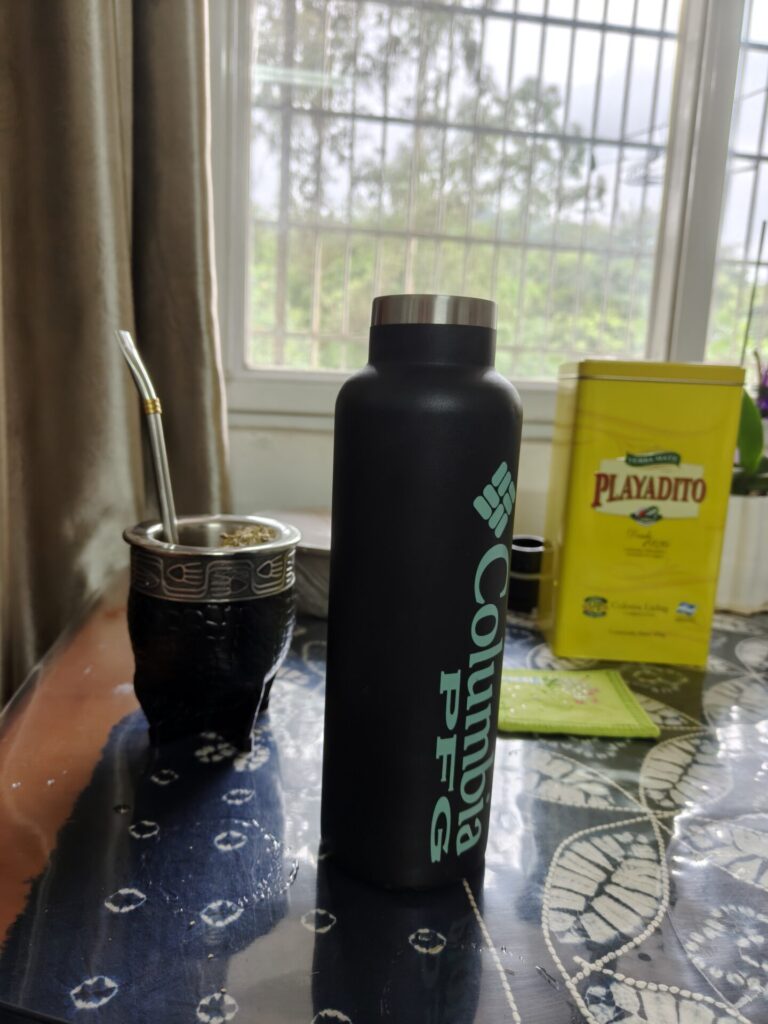
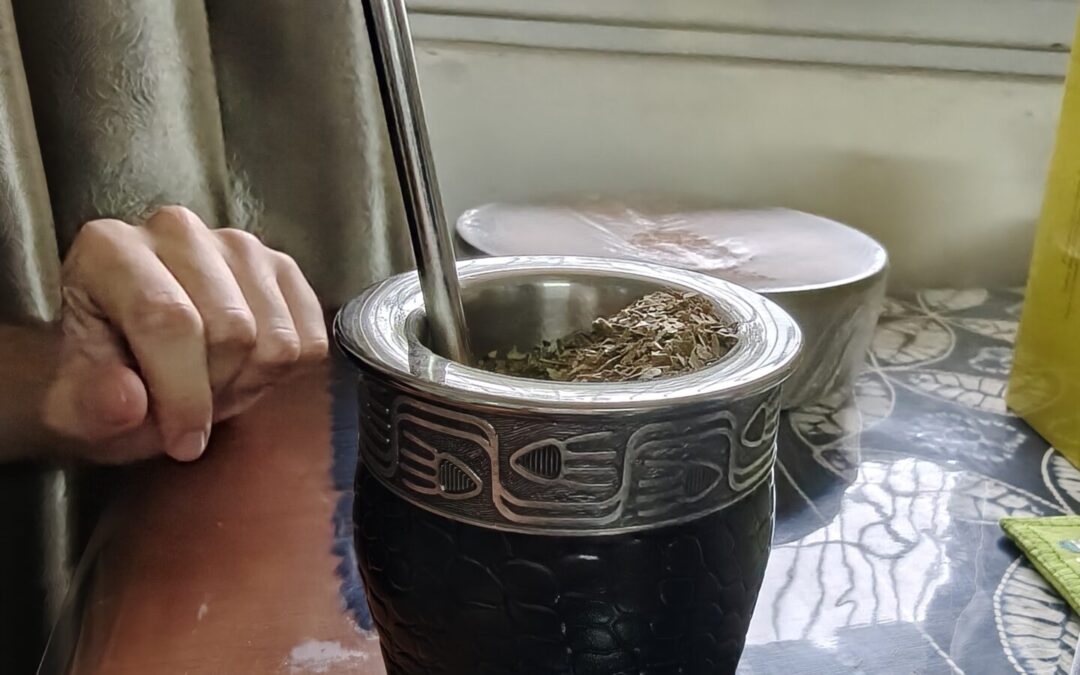
First, I want to tell you about the process of making mate. Mate is actually the cup. And it’s a very cool cup! Matías recently bought a new one so he brought that one for our mate experience. The tea leaves are called yerba. So you can call the drink yerba mate. The tea leaves are smaller than most Chinese tea leaves and a deep green.
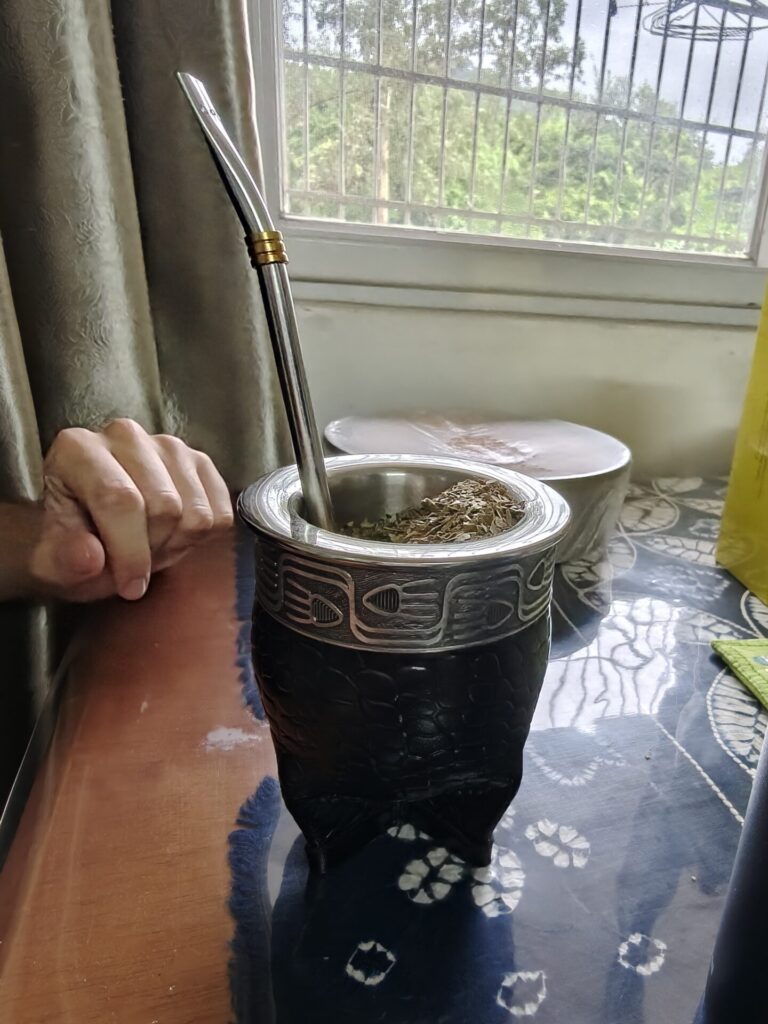
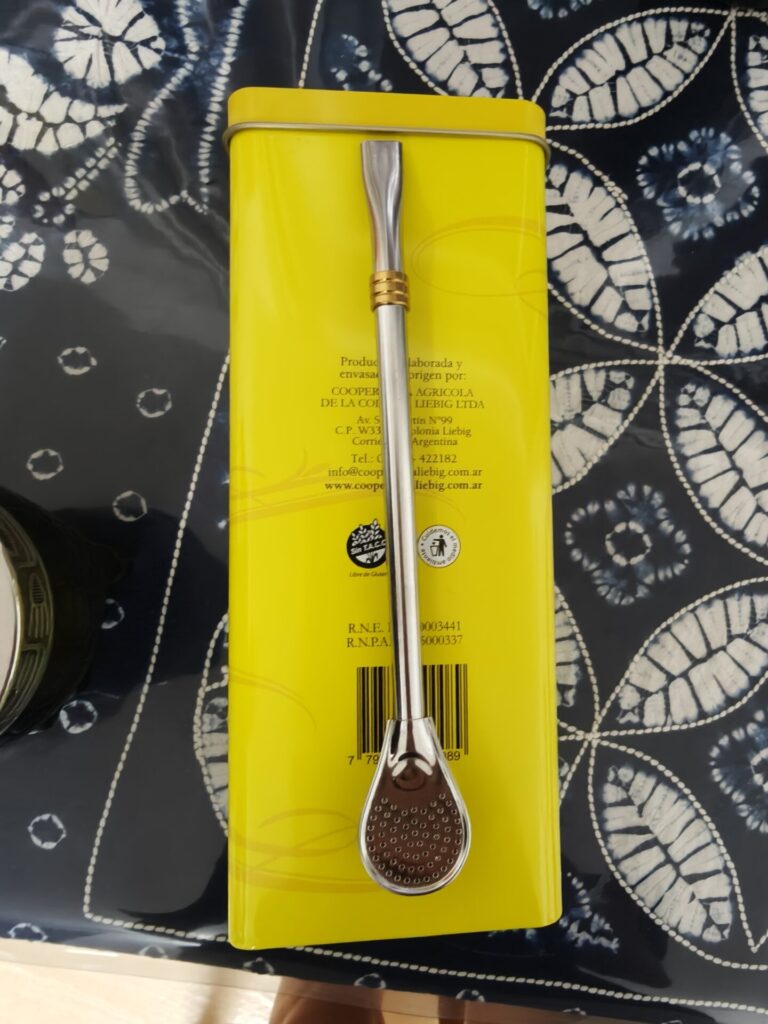
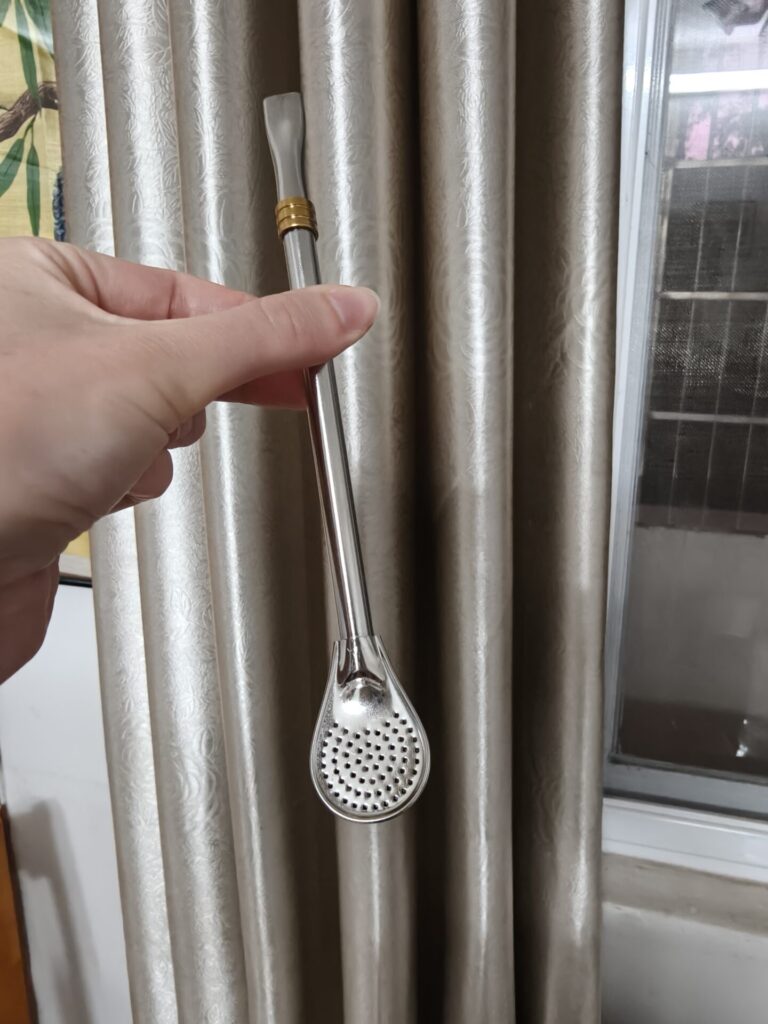
Another important part of mate is the straw, called bombilla. This isn’t just any straw though! Since you just pour the yerba into the cup, you need a straw to filter out the leaves so you aren’t drinking lots of leaves. Also, the top of the straw is thin and flat. That made for a nice drinking experience.
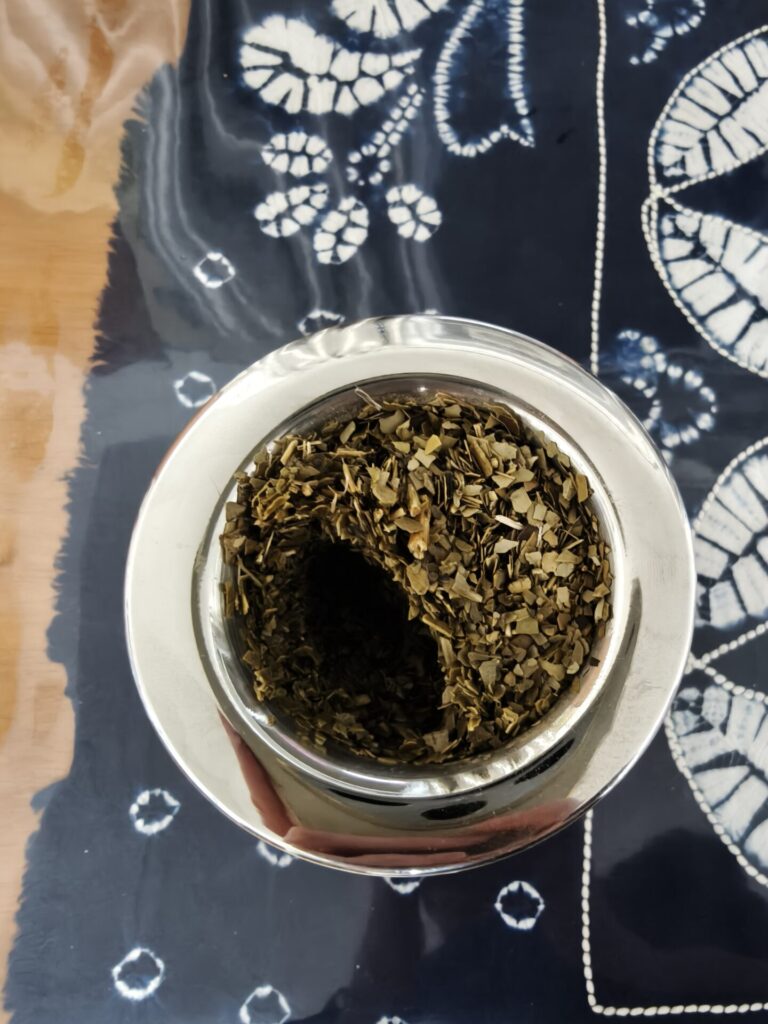
So, to make mate, you pour the yerba into the mate and fill almost the entire cup. Matías then pushed all the leaves to one side so that he could pour the water into the other side. He called this making the little mountain (preparer el mate, hacer la montañita). Maybe it’s called that because the leaves are like a little mountain on one side of the cup. You put the straw into that empty space, or maybe the straw is already inside (I sort of forgot). Then you pour the water (cebar) in the empty space near the straw.
Matías said that some people don’t do it this way. If you’re in a hurry, you can skip the little mountain and just pour the water over everything. But we had time, so he did it this way.
Next, we were ready to enjoy the mate. Now, with mate, you only need one cup for a group of people. I think this is one of the most interesting aspects of mate because you can drink it alone, but it’s also common to drink it with a group of friends.
Matías said that the host should drink the first cup of mate because that’s the strongest and probably the most bitter one. So he drank that one. After that, he pours more hot water into the cup for the next person.
There are lots of interesting rules for drinking mate. Since everyone is sharing a cup, you shouldn’t take too long to drink it because that’s not being considerate of others. Also, you shouldn’t touch the straw. I kept forgetting about that one! I guess I have the habit of touching the straw. When you finish your cup, you will know because there will be a gurgling sound. Kendra and I kept making long drawn out gurgling sounds. The proper way to make the gurgling sound is to inhale sharply and strongly so the gurgling sound is clear and confident. I never mastered that art of proper gurgling, haha.
Another rule to keep in mind: when you give the cup back to the host so that he/she can pour more water for the next person, don’t say thank you unless you don’t want any more. Saying thank you means that you are finished drinking mate for the day. So if you say thank you after the first cup, don’t be surprised if the host skips you on the next go-around.
With all these rules and culture around making mate, perhaps you’re curious about the taste. I was very curious! I’d heard it was bitter, but lots of Chinese teas are bitter, so I was expecting something like that. I was expecting the earthiness of a Chinese tea, but yerba mate felt more like a mix between green and black tea, and slightly more bitter than both. The first cup that I tried was quite bitter, but the aftertaste was really nice. The second cup was slightly weaker, and I really liked it. If you don’t like bitter teas, mate might not be for you, but either way, it’s worth the experience at least once. I hope I get the chance to drink it again (during the middle of the day—maybe not in the evening).
In China, tea culture is huge, especially in the province of Guangdong where I live. Whether I’m meeting family in a home or a company leader in an office, it’s very common to be served tea. I enjoy this culture although sometimes if I’m meeting lots of people, it’s very easy to have too much tea. But I love the hospitality of sitting around sipping tea together.
Drinking mate (tomar mate) with a group of friends feels similar. Although since we’re sharing a straw, I feel more comfortable doing that with friends than with someone I’m meeting for the first time. But I love having something to sip while I sit around and chat with friends. In America, maybe drinking coffee is a similar type of culture. Whatever it is, offering guests something and then sitting around chatting over our drinks is a wonderful way to build community and develop friendships!